October 24, 2026 · Published by Tricia Mulcahy
Renewing the furniture you love in leather or fabric
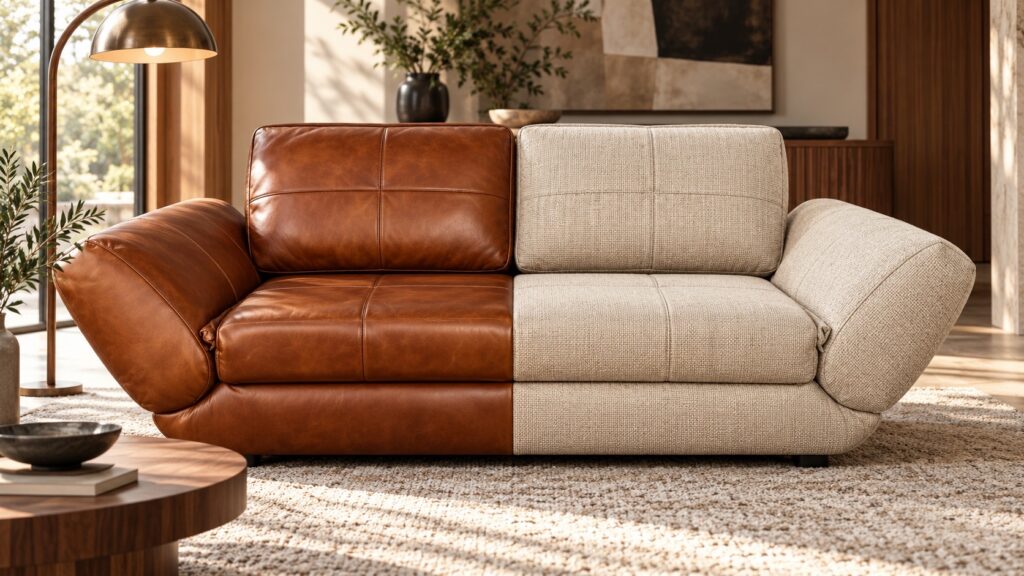
One familiar sofa shape, two material possibilities: cognac leather and textured fabric. Design concept.
A favorite sofa can be difficult to replace. It may fit perfectly beneath a window, leave just enough room for a walkway, or offer the seat depth you have never found in another piece. It may also be the chair a parent loved or the sofa that has been part of your family for years.
When the covering wears out or the room changes, reupholstery gives you a way to keep those qualities and choose a look that belongs in your home today. At Leather Leather Furniture Gallery, we help customers weigh the condition, comfort, cost and personal value of a piece before deciding how to renew it.
Keep the fit and change the aesthetic
New upholstery can soften a traditional silhouette, bring warmth to a modern room, or connect a familiar piece with new rugs and finishes. You can retain dimensions that already work while exploring a different color, texture or finish. Some construction details can also be modified, depending on the frame. |
Why Reupholstery Can Cost More Than Buying New
 One of the questions we hear most often is whether reupholstery should cost less because you already own the furniture. It is an understandable assumption. In many projects, however, professional reupholstery costs more than purchasing a mass-produced replacement. The comparison changes when the alternative is a new piece of comparable construction and materials. What the investment includes
Owning the frame does not eliminate the work around it. A project may require removing the old covering, inspecting the structure, repairing support, rebuilding cushions, developing patterns, cutting new material, sewing and fitting the upholstery, and completing the finishing details. Pickup and redelivery also need to be considered.
Curves, tufting, piping and pattern alignment add complexity. Unsprung Upholstery’s pricing guidance likewise identifies furniture style, internal repairs and material choice as cost factors; matching a pattern can require extra material and labor. [1]
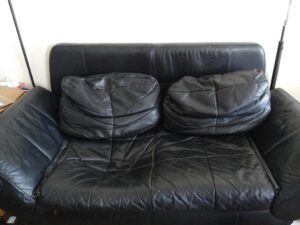
Before — a sofa shown in our website reupholstery gallery. Original photograph.
The useful question is whether the finished piece will give you the quality, fit and enjoyment you want for the investment. Reupholstery is not automatically the least expensive option, and it does not automatically increase resale value. |
Leather or Fabric for the Furniture You Love
Explore leather grain, woven texture and color together before choosing a new covering.
Leather offers character and depth
Leather can be a substantial part of a reupholstery budget. Hides vary in shape and usable area, and the selected leather, panel sizes and placement affect how much material a piece requires. A carefully selected upholstery leather can provide a beautiful, serviceable surface for many years when matched to the household and cared for appropriately.
Natural aniline leathers show more individual character and may develop a visible patina. More protected finishes can suit customers seeking easier day-to-day maintenance. Even within semi-aniline leather, appearance varies: Moore & Giles describes its Carlyle selection as having a soft feel, relatively uniform color and less visible natural markings. [2] Choose the specific leather, rather than assuming every hide will behave alike.
Fabric opens up an extensive design palette
Fabric is a wonderful choice for reupholstery. Our large fabric library lets you explore woven textures, velvets, chenilles, patterns and performance options. An oatmeal weave can make a familiar sofa feel lighter; a deep color or a subtle pattern can give it an entirely different presence.
Performance features are specific to the textile. Crypton, for example, describes residential fabrics designed to resist everyday stains and liquids, while still requiring appropriate cleaning. [3] Fabric is not automatically inexpensive, stain-proof or pet-proof. We help consider texture, cleaning requirements and how the furniture will be used. |
Lasting Comfort Starts Beneath the Covering
Frame, suspension and cushion materials all contribute to comfort. Illustrative workshop view.
Beautiful new upholstery needs a sound foundation. Replacing the outside while overlooking a loose frame or tired support can leave the furniture looking renewed but still feeling worn. Our approach considers the inside as well as the finish you see.
Frame and suspension
We check the frame and its joints, looking for movement, damage or areas that need reinforcement. We also assess the suspension, including springs, webbing and their attachments. Depending on the piece and the agreed scope, repair or replacement can restore support before new upholstery is fitted.
Foam and cushion construction
Foam replacement and cushion rebuilding can improve support, shape and seating comfort. We can discuss a firmer or softer feel, appropriate foam cores, wrapping and other filling options for the furniture. Foam density and firmness describe different properties; the choice should account for cushion thickness, construction and everyday use.
The goal is a complete, considered renewal. Some hidden conditions only become clear once the old upholstery is removed, so structural work and material choices should be discussed as part of the project evaluation. The frame’s condition, chosen materials, use and care all influence future service life. |
Preserve the Piece and Plan Its Next Chapter
After — the corresponding sofa from our website gallery, photographed in the workshop. Original photograph.
Financial value and personal value
A quality frame, distinctive design or hard-to-replace proportions can make a piece worth considering. Personal history can matter just as much. Reupholstery allows a family piece to remain useful instead of being stored away because the covering no longer suits the room.
With a sound structure, suitable materials and ongoing care, renewed furniture may continue serving your household for years and could eventually be passed on. That possibility is a reason to assess the foundation carefully, rather than promise a fixed lifespan for every project.
An investment in continued use
Keeping a suitable piece in service can also support a less wasteful approach to furnishing your home. The environmental value becomes especially meaningful when the work gives you furniture you will continue to enjoy and maintain.
Start with a professional evaluation
Send Leather Leather Furniture Gallery photographs of the front, back and sides, close-ups of wear, and approximate dimensions. Tell us what you love about the piece, what you would change, and whether you are considering leather, fabric or both. We will help assess the possibilities, including foam replacement and frame or suspension work where needed.
Call 650-617-0220 or visit leatherfurnitureca.com/contact-us/ to request an evaluation. Explore our reupholstery and foam replacement services to see how we can help renew the furniture you love. |
The Environmental Value of Reupholstery
Choosing reupholstery can support a practical environmental goal: getting more useful life from furniture that already exists. The U.S. Environmental Protection Agency encourages considering repair of worn or broken furniture before disposal. Its guidance also asks shoppers to consider durability and the environmental effects of their purchases. [4]
Prevent waste before managing it
The EPA places source reduction and reuse at the top of its waste management hierarchy, ahead of recycling, energy recovery and disposal. Source reduction means preventing waste before it is created. Reusing a product keeps it useful without first breaking it down into raw materials. [5]
Applied to a suitable sofa or chair, these principles help explain the appeal of reupholstery. A worn covering does not necessarily mean the frame has reached the end of its useful life. Renewing the upholstery while retaining sound components can delay disposal of the whole piece. This is an application of EPA guidance, rather than an EPA endorsement of a particular upholstery service.
Keep useful materials working longer
A sofa contains more than the leather or fabric you see. Its frame, metal support components and other serviceable parts represent materials that have already been extracted, processed and assembled. Retaining those components can reduce the need for corresponding new parts when renewal takes the place of a new purchase.
The actual benefit depends on what is retained, what must be replaced, transportation and how long the renewed furniture remains in use. Reupholstery still requires materials and energy, and removed coverings or foam may become waste. There is no single emissions-saving percentage that applies to every project.
Why furniture waste deserves attention
EPA data show that the United States generated approximately 12.1 million U.S. tons of furniture and furnishings waste in 2018. This broad category includes sofas, tables, chairs and mattresses; it is not a count of upholstered furniture alone or a current-year estimate. [6] The scale gives homeowners a reason to consider whether a worn piece can remain useful before replacing it.
Choose a renewal you will want to keep
At Leather Leather Furniture Gallery, we connect that longer view with a practical evaluation. Checking the frame and suspension, replacing worn foam where needed, and selecting leather or fabric appropriate for your household can make the renewed piece more useful to you. A covering you love is easier to keep when the support beneath it also works well.
The strongest reason to reupholster is a piece with a sound or repairable foundation, dimensions that suit your home, and a future in your everyday life. Caring for it after the work is complete helps that investment in continued use go further. |
Common Questions About Reupholstery
Can a leather sofa be reupholstered in fabric
Often, yes. A change from leather to fabric, or from fabric to leather, depends on the frame, cushion construction and the material’s suitability. The split-material sofa shown at the beginning illustrates two possible directions for the same shape; it is not a photograph of a completed customer project.
Does every older piece deserve reupholstery
Age alone does not establish quality. Construction, damage, comfort, dimensions and the cost of the work all matter. If the frame is unsuitable or the piece no longer fits your needs, replacement may be the better choice. We believe an honest evaluation is the right place to begin.
Can cushions be improved without complete reupholstery
Sometimes foam replacement, cushion rebuilding or a targeted repair can address the main problem while retaining a covering that is still in good condition. We can help determine whether a limited service or a more extensive project makes sense.
Further reading and resources
[1] Unsprung Upholstery — Pricing FAQs
https://www.unsprungupholstery.com/price-range/pricing-faq
[2] Moore & Giles — Carlyle leather
https://mooreandgilesleather.com/carlyle/
[3] Crypton — Performance fabric care FAQs
https://crypton.com/crypton-faqs/
[4] US Environmental Protection Agency — Reuse and repair
https://www.epa.gov/climate-change/what-you-can-do-about-climate-change-waste
[5] US EPA — Waste management hierarchy
https://www.epa.gov/smm/sustainable-materials-management-non-hazardous-materials-and-waste-management-hierarchy
[6] US EPA — Furniture and furnishings data for 2018
https://www.epa.gov/facts-and-figures-about-materials-waste-and-recycling/durable-goods-product-specific-data
Leather Leather — Reupholstery and project gallery
Reupholstery
Leather Leather — Foam replacement
Foam Replacement
Resources reviewed October 24, 2026. Material performance and available services depend on the individual product and project. |
← Back to the blog
 One of the questions we hear most often is whether reupholstery should cost less because you already own the furniture. It is an understandable assumption. In many projects, however, professional reupholstery costs more than purchasing a mass-produced replacement. The comparison changes when the alternative is a new piece of comparable construction and materials.
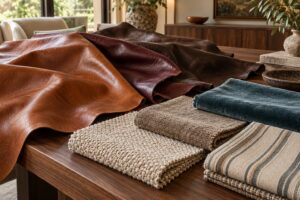 Explore leather grain, woven texture and color together before choosing a new covering.
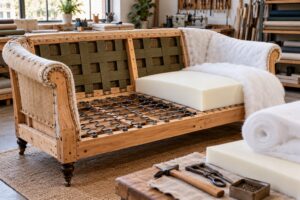 Frame, suspension and cushion materials all contribute to comfort. Illustrative workshop view.
Beautiful new upholstery needs a sound foundation. Replacing the outside while overlooking a loose frame or tired support can leave the furniture looking renewed but still feeling worn. Our approach considers the inside as well as the finish you see.
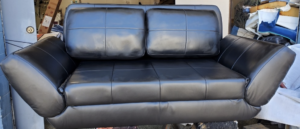 After — the corresponding sofa from our website gallery, photographed in the workshop. Original photograph.
Comments are closed here.