High Point Market: Exploring Warm Color, Rich Texture, and the Art of Mixing Styles
An interior designer’s perspective on autumn-inspired palettes, classic influences, contemporary shapes, and creating rooms with lasting character.By Tricia Mulcahy | Interior Designer, Leather Leather Furniture Gallery
When I visit High Point Market, I’m looking at much more than individual pieces of furniture. I’m studying the relationships between them: how a chair changes the feeling of a sofa, how a leather color responds to the materials around it, and how lighting brings out details that might otherwise go unnoticed.
A beautiful piece can catch your attention. A thoughtfully composed room helps you understand why it works.
During this visit, I’ve been particularly drawn to warm, earthy colors, deeper leather tones, softer silhouettes, and combinations of materials that give a room dimension. Burgundy, brown, muted green, cognac, and golden yellow have appeared in different settings, sometimes as the main statement and sometimes as a quieter supporting layer.
What interests me is how differently those colors can be interpreted. A light contemporary room and a richly furnished, library-inspired space can share a similar sense of warmth while expressing entirely different personalities.
These are the ideas I’m exploring at market—and the design principles I consider when imagining how they might translate into our clients’ homes.
Warmth Is More Than a Color Choice
Warmth in a room comes from several things working together: color, texture, light, shape, and the balance between open space and furniture.
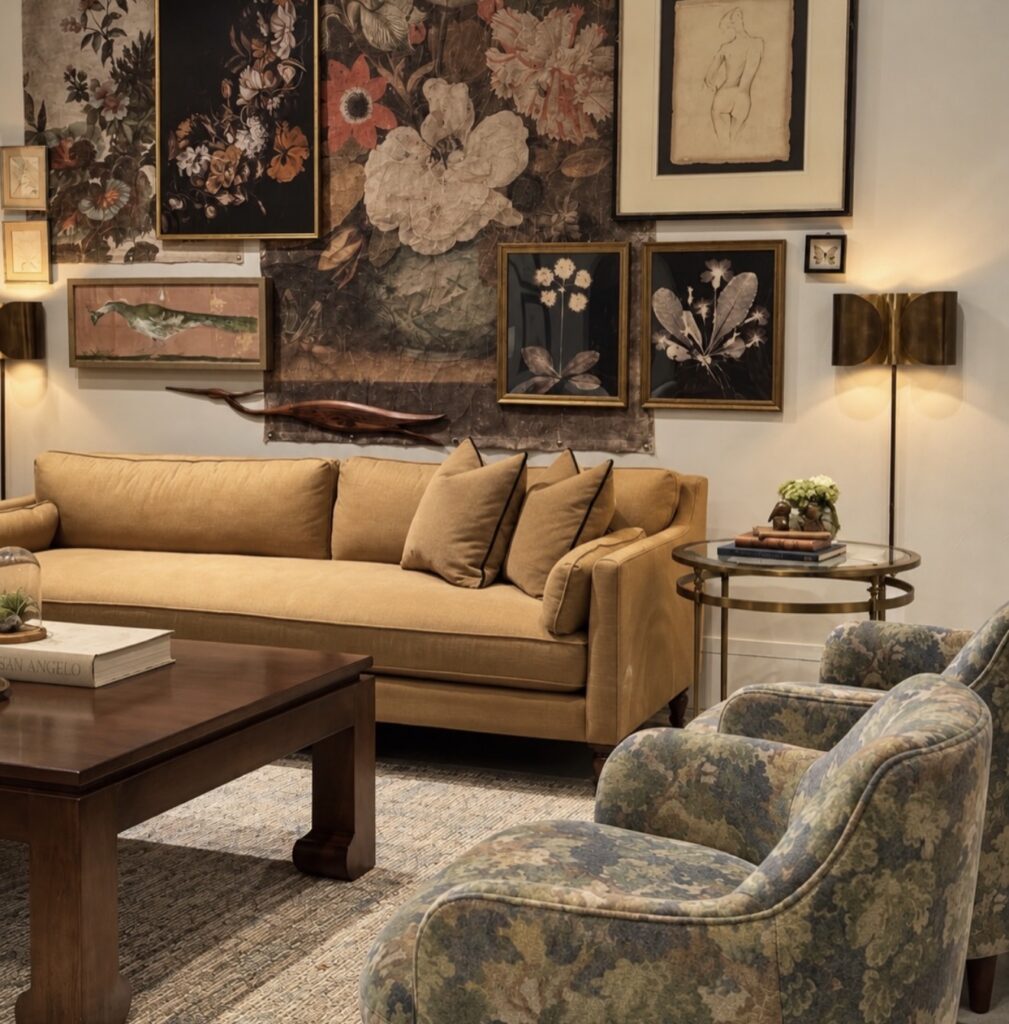
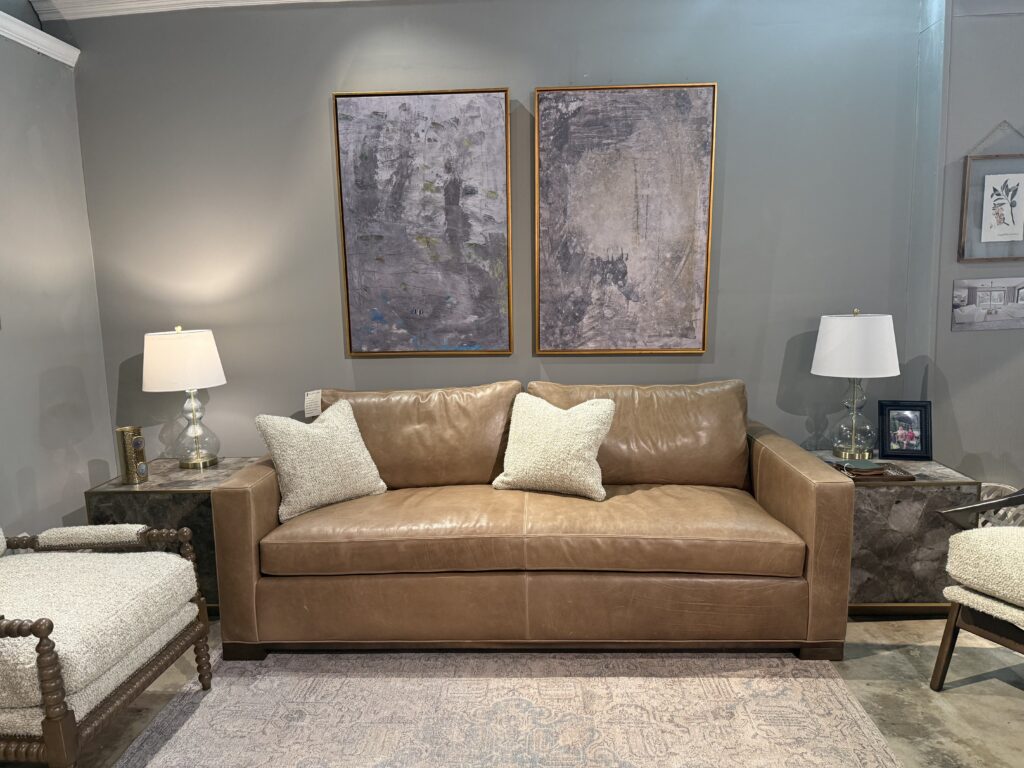
A brown sofa alone does not necessarily make a room feel welcoming. Its surroundings influence how we experience it. Pair it with warm wood, a textured rug, and softly illuminated accents, and the room may feel relaxed and layered. Place that same sofa against pale walls with a sculptural table and minimal accessories, and it can take on a cleaner, more contemporary identity.
This is one of the reasons I enjoy seeing complete showroom settings. They demonstrate how much the supporting decisions matter.
In the displays I photographed, warmth often came through a combination of earthy upholstery, natural-looking materials, and softer forms. The colors reminded me of fall, but the rooms did not feel dependent on seasonal decorating.
That distinction matters. I want a room to feel inviting throughout the year, with enough flexibility to evolve as the people living in it do.
An Autumn-Inspired Bedroom at American Leather
Warm upholstery, burgundy accents, and mossy golden-green ottomans create a softly layered bedroom setting in the American Leather showroom.
The upholstered bed in this setting brings together several of the ideas that caught my attention at market.
Its warm, muted upholstery establishes a gentle foundation. Deeper burgundy pillows add richness, while the rounded ottomans introduce a mossy golden-green note. Light bedding provides breathing room between those colors.
From a design perspective, this is a study in color proportion.
The stronger colors occupy smaller areas, allowing them to create interest without taking over the room. The lighter bedding gives the eye somewhere to rest, while the bed’s upholstered frame connects the entire composition.
When several colors appeal to you, the question is often how much space each should occupy. A favorite burgundy might feel beautiful on a pair of pillows, dramatic on a chair, and much more enveloping across an entire sectional. Each choice creates a different experience.
The shapes also contribute to the bedroom’s atmosphere. The headboard has softened edges, the upholstered base curves around the foot of the bed, and the ottomans repeat that rounded language.
That repetition gives the setting continuity. The pieces have different functions, but they feel related.
For a bedroom, I appreciate how those softer forms can make a substantial piece of furniture feel visually gentler. The result is comfortable and contemporary, with color providing much of its personality.
Neutrals and Green: A Lighter Expression of Warmth
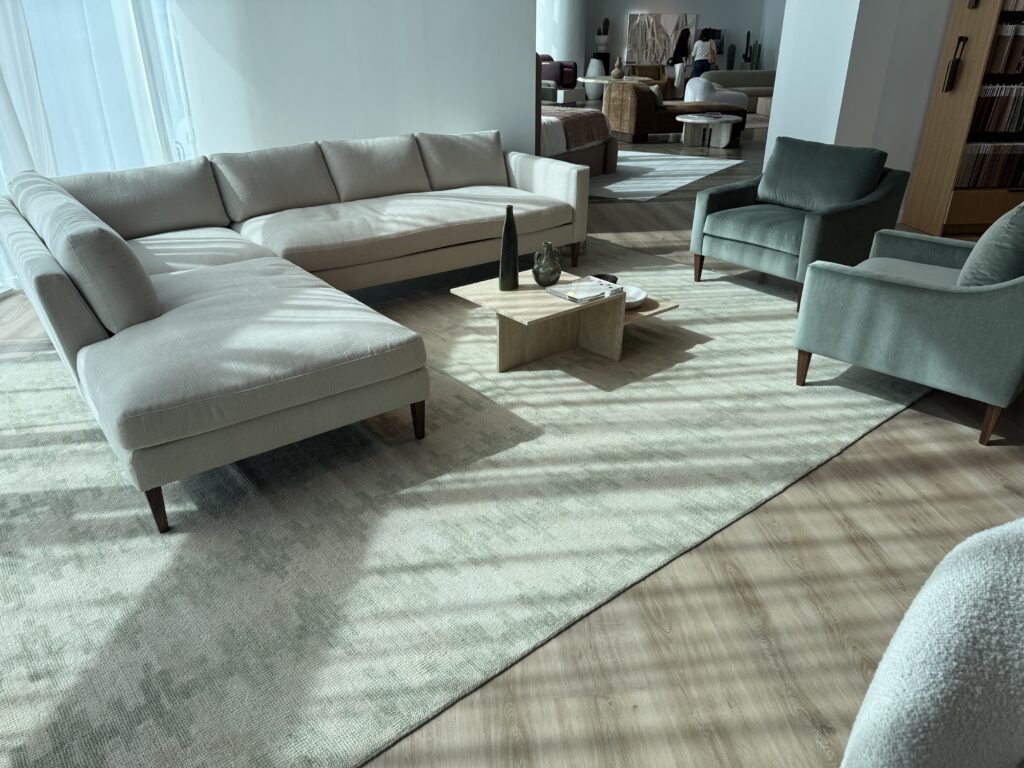
A light neutral sectional and green accent chairs offer a casual, contemporary interpretation of the earthy colors seen throughout these market visits.
Another American Leather setting takes a lighter approach.
Here, the neutral sectional provides the largest area of color, while the green side chairs introduce contrast. Wood accents and a softly textured rug help connect the pieces.
I like this as an example of how to introduce an earthy palette while maintaining an airy room.
The sectional acts as a visual foundation. Its quieter color allows the chairs to carry more of the room’s identity, and the repetition of green across two chairs makes that choice feel intentional.
This illustrates a useful design principle: repetition gives an accent a sense of belonging.
An accent color can appear in two chairs, in artwork and a pillow, or in several smaller details. It does not need to be repeated everywhere. A few thoughtful connections are often enough.
The green chairs also show how color can bridge different moods. Green can sit comfortably alongside neutral upholstery, brown leather, warm wood, or burgundy accents, depending on the particular shades involved.
For this setting, the appeal is its ease. It feels casual enough for everyday living while retaining the clean lines and restraint of a contemporary room.
Classic and Contemporary Can Beautifully Complement Each Other
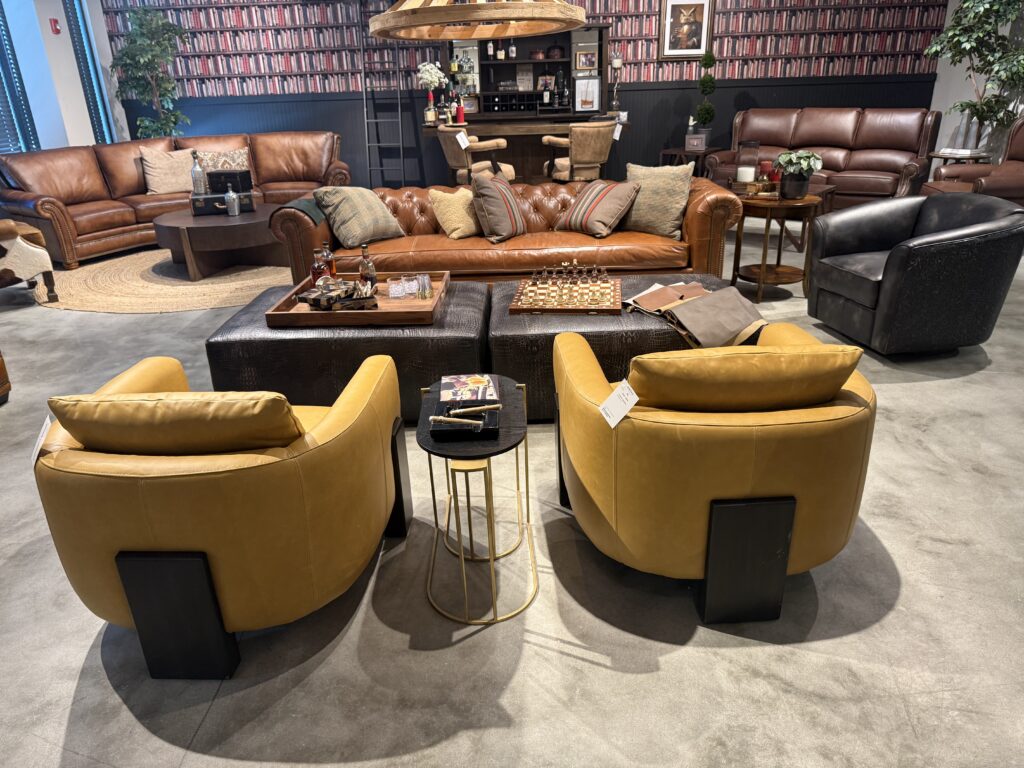
A cognac Chesterfield, mustard-yellow chairs, dark accents, and library-inspired styling bring classic and contemporary elements into the same conversation at Omnia Leather.
One of the ideas I want to emphasize is that classic and contemporary furniture can easily complement each other.
A room does not need to belong entirely to one style category to feel cohesive.
At the Omnia Leather showroom, a traditional tufted Chesterfield sits alongside curved yellow accent chairs with a more contemporary expression. Rich brown leather, dark tables, and a library-inspired backdrop give the setting a collected, welcoming character.
The Chesterfield brings familiarity through its tufting and rolled arms. The yellow chairs introduce a different silhouette and a brighter concentration of color.
Their relationship works because there are connections beneath the differences: warmth, rounded forms, and a shared sense of substance.
When I mix styles, I look for those connections. Color may provide one. Shape, scale, finish, or texture may provide another.
A traditional sofa can feel refreshed beside a contemporary table. A modern sectional can gain character from an older wood cabinet. A classic chair can become more relevant to a room through a new fabric and a different surrounding palette.
The balance requires attention to scale and visual weight. A large, substantial sofa needs surrounding pieces that hold their own, even if those pieces are visually lighter or stylistically different.
This is where thoughtful mixing becomes more than simply placing favorite objects together. Each piece should have enough presence to participate in the room.
For clients who already own furniture they love, this approach can open up possibilities. A new direction can grow around those pieces, allowing a home to evolve while retaining its history.
The Vintage Library Look: Richness, Comfort, and Character
The Omnia display also captures the appeal of a library-inspired room.
Cognac leather, golden-yellow seating, darker surfaces, books, and layered accessories create a setting that feels established. There is a sense of comfort and familiarity, even within a showroom.
What makes this interesting to me is the range of values—the relative lightness and darkness of the materials.
The yellow chairs bring brightness to the foreground. The cognac sofa provides a warm middle tone. Darker furniture and architectural details anchor the setting.
That variation helps the individual pieces remain distinct.
A room composed entirely of medium-brown materials can sometimes lose definition, even when every piece is attractive. Introducing lighter and darker elements creates separation and gives the eye a clearer path through the space.
You could translate this idea into a home with a brown leather sofa, a lighter rug, deeper wood accents, and one carefully chosen color in the seating or accessories.
The goal is a balanced composition with enough variation to reveal the character of each piece.
Leather and Fabric: A Conversation Between Materials
Cognac leather frames textured neutral fabric, with coordinating pillows and nailhead trim bringing the materials together at Omnia Leather.
The combination of leather and fabric on this Omnia sofa is another example of how materials can enrich one another.
The cognac leather defines the frame, arms, and lower portion of the piece. The lighter fabric brings softness and visible texture to the seating and back cushions. Leather piping creates a connection between those areas.
That detailing is significant. It allows the materials to read as parts of one design.
From across a room, the leather gives the sofa definition. Closer up, the woven fabric adds another level of interest. The pillows repeat colors and textures already present, reinforcing the relationship.
This is contrast with continuity: enough difference to create dimension, with enough repetition to keep the design cohesive.
The same principle applies when leather and fabric are used on separate pieces. A leather sofa can sit beautifully with fabric chairs when their colors, proportions, and overall character work together.
I also pay attention to how much pattern a room needs. Here, texture does much of the work. The upholstery has visual interest without requiring a large, dominant print.
For someone who enjoys a quieter palette, that can be an especially appealing way to build a layered interior.
Softer Shapes and the Way a Room Feels
Across several of these settings, I noticed softened edges, curved upholstery, rounded ottomans, and furniture arranged to encourage conversation.
Curves affect how we perceive a piece. They can soften its outline and introduce movement into a room filled with architectural angles.
Most interiors already contain plenty of straight lines: walls, windows, doorways, cabinetry, and flooring. A curved chair, circular table, or rounded ottoman can provide relief within that structure.
The effect becomes more interesting when curves are balanced with simpler forms.
In the American Leather bedroom, rounded ottomans sit within a setting defined by the bed and tall windows. In the Omnia library display, curved chairs relate to rolled sofa arms while surrounding tables and architectural details provide structure.
I would consider both the visual effect and the floor plan before selecting a curved piece. Its shape needs to support the room’s circulation, seating relationships, and everyday use.
A beautiful curve is most successful when it contributes to the way the space functions.
A ’90s-Inspired Introduction: An Open Design Question
Deep-toned leather, rounded upholstery, and a relaxed, gathered appearance give this American Leather introduction a nostalgic character.
Some pieces at market immediately appeal to me. Others make me stop and reconsider.
This new American Leather introduction reminds me of a ’90s upholstery look: rounded forms, deep leather tones, and an intentionally relaxed, lived-in appearance.
I can appreciate its sense of ease and the richness of the leather. The gathered upholstery gives it a different personality from a piece with a more tailored surface.
At the same time, I’m still deciding whether this particular expression is for me.
That is part of the value of attending market as a designer. It gives me opportunities to examine my own preferences and think about the clients who might respond differently.
A relaxed leather surface will appeal to someone who enjoys softness, character, and an informal atmosphere. Someone who prefers crisp upholstery and a more structured silhouette may have another reaction.
Neither response needs to be forced.
When I evaluate a new introduction, I consider the feeling it creates, the setting it might suit, and whether its character would remain appealing beyond the initial novelty.
Would you welcome this lived-in look back into your home, or would you give it a pass?
Dried Florals as Sculptural Elements
An open arrangement of dried flowers and branches adds height, texture, and movement to a warm wood console in the American Leather showroom.
Furniture establishes much of a room’s structure, but accessories influence its atmosphere.
This dried floral arrangement caught my attention because of its shape as much as its color. Branches extend upward and outward, while finer stems and trailing elements introduce movement.
The simple vase gives the arrangement a quiet base. The warm wood console and earthy artwork reinforce its palette.
What I find especially effective is the negative space between the stems.
An arrangement does not need to be dense to have presence. Here, the open areas allow the background to remain visible and make the individual branches easier to appreciate.
The shadows add another layer, extending the composition onto the wall and artwork behind it.
In a home, a branch arrangement can help connect the scale of a low console to a tall wall. It can also introduce a more organic shape into a room filled with upholstered and rectangular forms.
I would consider its height, spread, and placement carefully so it complements the surrounding pieces and leaves useful surfaces and sightlines clear.
Dimension Comes From More Than Adding Objects
Light upholstery, warm leather, wood, reflective glass, and sculptural lighting stand out against a dark backdrop.
This setting captures your eye through the relationships between its materials.
The pale upholstered bench is clearly defined against the darker background. Warm leather chairs add depth. Wood tables contribute grain and a quieter surface, while glass lighting and mirrors introduce reflection.
The room feels dimensional because those surfaces respond differently to light.
Soft upholstery absorbs and diffuses it. Leather reveals highlights and creases. Glass and mirrors create brighter reflections. Wood contributes its own variation through grain and finish.
This is why I consider texture even when designing a room with a limited color palette.
A neutral interior can have considerable richness when it includes a thoughtful balance of smooth, woven, reflective, and matte surfaces.
Light–dark contrast also creates a hierarchy. The pale bench reads strongly in the foreground, the seating forms another layer, and the darker wall provides a backdrop.
That sense of foreground, middle ground, and background gives the arrangement depth.
When a room feels flat, I often look at whether its furnishings are too similar in value or texture. A change in one material or a stronger light–dark relationship may make a greater difference than adding more accessories.
Lighting Helps Complete the Composition
The lighting in this setting contributes both illumination and shape.
The suspended fixtures occupy the space above the furniture, connecting the seating arrangement to the room’s height. Table lamps introduce light at a lower level, while mirrors reflect portions of the display.
From a design perspective, this creates several places for the eye to travel.
At home, I consider where lighting is needed for reading, conversation, and general use, along with the atmosphere it creates. The appearance of a fixture matters, but so does its relationship to the furniture beneath and around it.
A sculptural light can become a focal point. A quieter lamp may support a reading chair or bring warmth to a darker corner.
The most successful arrangement gives the room a comfortable rhythm across different heights.
Bringing Market Ideas Home
My purpose in visiting High Point is to discover possibilities and evaluate them through the lens of real homes.
A showroom can present a complete design statement. At home, we work with existing architecture, favorite possessions, room dimensions, natural light, and the practical needs of everyday life.
The ideas from these displays can be introduced at many scales.
A green accent chair may bring new life to a neutral living room. A lighter textured rug may give a dark leather sofa greater definition. Burgundy pillows can introduce richness to a bedroom. Contemporary tables can refresh a setting built around classic upholstery.
Reupholstery may also offer a way to carry a loved piece into a new design. A different fabric, leather, or color can change how that piece relates to its surroundings. Its suitability depends on the furniture and the work involved, which we can help evaluate.
What I value most is a room that feels personal and considered. Trends can offer inspiration, but the final choices should support the people who live with them.
What I’m Taking Away From High Point
The strongest connection among these visits is a sense of warmth expressed through many different design languages.
I’ve seen it in a softly upholstered contemporary bed, in neutral seating paired with green chairs, in a classic cognac Chesterfield, and in the combination of leather and textured fabric.
I’ve also seen how much dimension comes from thoughtful contrast: light beside dark, smooth beside woven, classic beside contemporary, and substantial furniture beside more delicate accents.
These combinations leave room for individual taste. They allow us to appreciate new introductions, revisit familiar styles, and decide which ideas belong in our own homes.
At Leather Leather Furniture Gallery, that is the conversation I want to bring back from market: how to take inspiration and turn it into a comfortable, cohesive space with character that lasts.
Visit our Menlo Park showroom to explore leather and fabric upholstery, furniture, and possibilities for bringing these ideas into your home. Whether you’re starting fresh or working around pieces you already love, we can help you consider color, texture, scale, and style together.
 Warmth in a room comes from several things working together: color, texture, light, shape, and the balance between open space and furniture.
A brown sofa alone does not necessarily make a room feel welcoming. Its surroundings influence how we experience it. Pair it with warm wood, a textured rug, and softly illuminated accents, and the room may feel relaxed and layered. Place that same sofa against pale walls with a sculptural table and minimal accessories, and it can take on a cleaner, more contemporary identity.
This is one of the reasons I enjoy seeing complete showroom settings. They demonstrate how much the supporting decisions matter.
In the displays I photographed, warmth often came through a combination of earthy upholstery, natural-looking materials, and softer forms. The colors reminded me of fall, but the rooms did not feel dependent on seasonal decorating.
That distinction matters. I want a room to feel inviting throughout the year, with enough flexibility to evolve as the people living in it do.
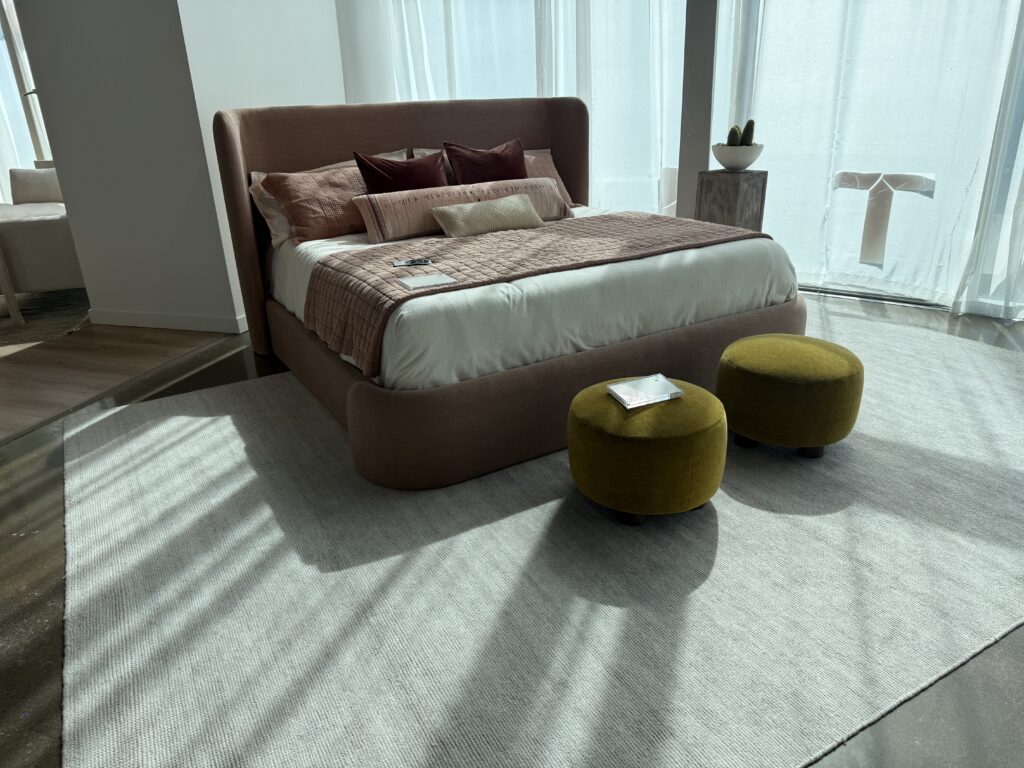 Warm upholstery, burgundy accents, and mossy golden-green ottomans create a softly layered bedroom setting in the American Leather showroom.


Comments are closed here.